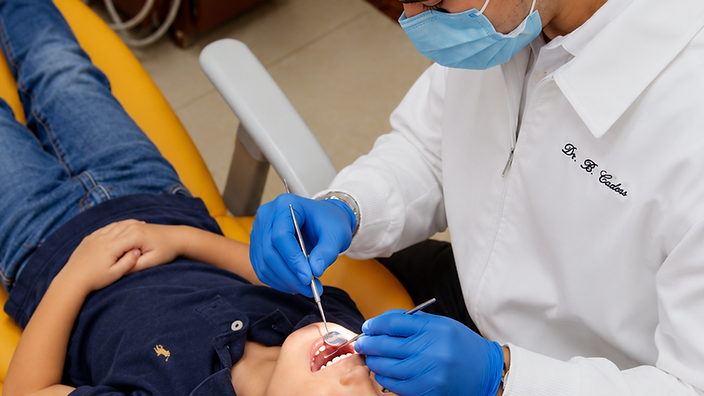
What early, limited orthodontic treatment is, and why it is recommended for some children and not others.
By Dr. Bernardo A. Caldas · June 18, 2026 · 4 min read
Phase I, or early interceptive treatment, is limited orthodontic care provided while a child still has a mix of baby and adult teeth. Its purpose is specific: to address concerns that benefit from being treated during active growth.
This might include guiding jaw growth, correcting a crossbite, creating room for crowded developing teeth, or addressing a habit such as thumb sucking.
Phase I is typically brief, often around nine to twelve months, and may involve an expander, partial braces, or a simple appliance.
It is important to understand that not every child needs Phase I. Many children are better served by monitoring and waiting until comprehensive treatment, if it is needed at all. Recommending treatment only when it will make a meaningful difference is central to our approach.
When Phase I is complete, a resting period follows with regular monitoring. Often, this makes later Phase II treatment shorter and more straightforward.
Explore treatment options