Looking beyond the teeth
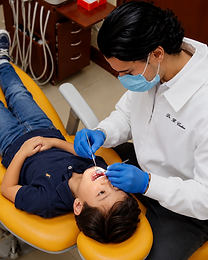
We consider how breathing, sleep, and jaw development are connected, not just alignment in isolation.
Children · Teens · Adults
Orthodontic care that considers breathing, growth, and facial development.
Overview
The way you breathe shapes the way you grow. Mouth breathing, snoring, and restless sleep can be connected to jaw position, palate shape, and airway development. Airway orthodontics looks beyond the teeth to support a clear airway, restful sleep, and balanced facial growth, often beginning with gentle, early guidance for children and continuing into adult care.
Children, teens, and adults with mouth breathing, snoring, restless sleep, or airway-related growth concerns.
Benefits
Supports clear, nasal breathing
Encourages restful, restorative sleep
Guides balanced facial and jaw growth
Addresses root causes, not only symptoms
Coordinated care with your physician or ENT
What to Expect
Airway-focused care is often most effective when started early, though adults benefit too. Phase I expansion is typically brief, around 9 to 12 months, with ongoing monitoring. We guide each patient at their own pace and coordinate with your physician when sleep or breathing concerns extend beyond orthodontics.
Treatment Guide
Orthodontic treatment is about more than straight teeth. The way the jaws grow, the width of the dental arches, tongue posture, nasal breathing, and facial development can all influence how a patient functions and how the bite develops.
Airway-related findings are considered as part of a comprehensive orthodontic evaluation. When concerns such as chronic mouth breathing, snoring, or restricted nasal breathing are identified, we can coordinate with the appropriate medical or dental specialists while addressing orthodontic problems that may benefit from treatment. Options may include expansion, growth modification, braces, clear aligners, or other customized appliances.
Children, teens, and adults with orthodontic concerns that may occur alongside breathing or airway-related symptoms, such as chronic mouth breathing, snoring, narrow upper jaws, crossbites, or jaw growth discrepancies.
A comprehensive evaluation considers the teeth, bite, jaw relationships, growth pattern, and facial development. We ask about breathing and sleep-related symptoms when clinically relevant. When orthodontic treatment is indicated, a personalized plan is created. If airway or sleep-related concerns require further evaluation, we coordinate with the appropriate provider, such as an ENT, pediatrician, sleep physician, or allergist.
Care depends on the appliance used, from expanders to aligners. We provide guidance for cleaning and comfort so treatment fits easily into daily life.
Not every patient with mouth breathing, snoring, or a narrow upper jaw needs orthodontic treatment, and orthodontic treatment is not a substitute for medical evaluation of a sleep or breathing disorder. Our role is to identify relevant orthodontic findings, treat problems within the scope of orthodontics, and collaborate with other healthcare providers when additional evaluation is appropriate.
If you or your child experience persistent mouth breathing, loud snoring, restless sleep, pauses in breathing, or daytime fatigue, let us know. These symptoms can have many causes, and we can help coordinate appropriate evaluation.
Persistent mouth breathing, loud snoring, restless sleep, pauses in breathing, chronic nasal congestion, unusual sleep positions, daytime fatigue, difficulty concentrating, or behavioral concerns may warrant further evaluation.
Palatal expansion is primarily used to correct a narrow upper jaw and transverse bite problems. Expansion may also increase the dimensions of the nasal cavity in some growing patients, but it should be recommended based on an orthodontic indication rather than solely as a treatment for sleep or breathing disorders.
The Caldas Difference
We consider how breathing, sleep, and jaw development are connected, not just alignment in isolation.
When appropriate, early expansion supports the nasal airway and balanced facial growth during a key window.
We work alongside your pediatrician, ENT, or sleep physician when concerns extend beyond orthodontics.
Frequently Asked
An approach that considers how breathing, sleep, and jaw development are connected, using orthodontic guidance to support a clear airway and balanced growth. Airway-related findings are considered as part of a comprehensive orthodontic evaluation, and we coordinate with medical or dental specialists when concerns extend beyond orthodontics.
It can be. Snoring, mouth breathing, and restless sleep are sometimes linked to a narrow palate or jaw position. An evaluation helps determine whether orthodontic guidance can help, and whether further medical evaluation is appropriate.
No. While early guidance is often most effective, adults with airway-related concerns can benefit from coordinated care as well.
Orthodontists can help screen for signs and symptoms associated with sleep-disordered breathing, but obstructive sleep apnea requires appropriate medical diagnosis and management. If there is concern for sleep apnea, we may recommend evaluation by a physician or sleep specialist while coordinating any orthodontic care that may also be indicated.
Persistent mouth breathing, loud snoring, restless sleep, pauses in breathing, chronic nasal congestion, unusual sleep positions, daytime fatigue, difficulty concentrating, or behavioral concerns may warrant further evaluation. These symptoms can have many causes, so proper medical assessment is important.
Explore More
Your Next Step
Schedule a consultation at Caldas Orthodontics and discover a clearer, more personalized path to a confident smile in Weston, FL.
Caldas Orthodontics
We typically reply within a day