Always On
Braces stay in place, so treatment keeps moving forward without a daily decision about whether an appliance has been worn long enough.
Children · Teens · Adults
Braces keep working around the clock, but good orthodontic treatment is never automatic. If you are considering braces in Weston, FL, Dr. Caldas starts with how your teeth fit together, where movement is needed, and what your smile needs at this stage of life, then builds the plan around you.
Braces, Personally Planned
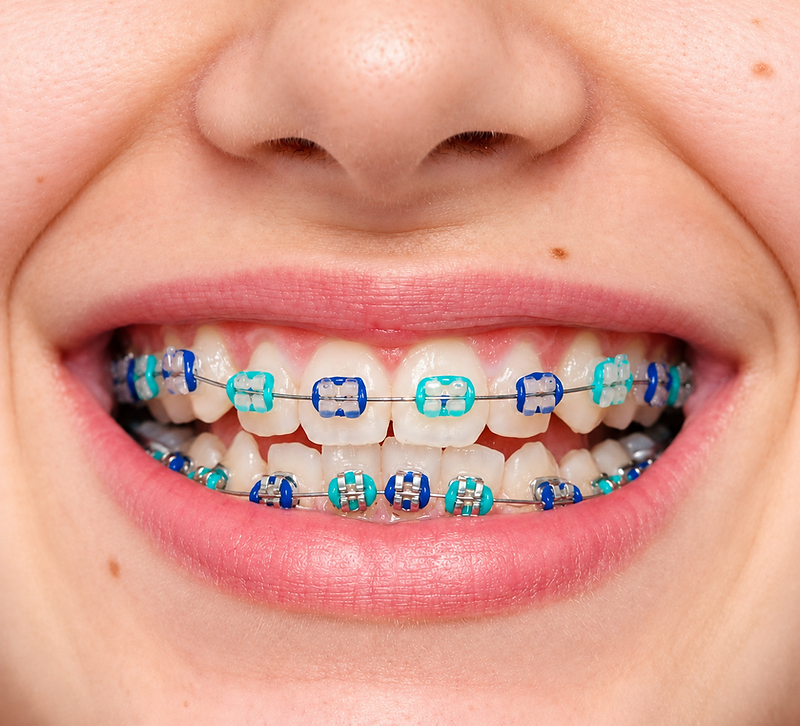
Braces use brackets and archwires to guide teeth through controlled movement over time. Because the appliance stays in place, there is no daily decision about when to wear it, an advantage when treatment benefits from steady force and close control.
A braces plan can be straightforward or highly detailed. Dr. Caldas considers crowding or spacing, bite relationships, age, development, and treatment goals before deciding how each stage should unfold.
The Essentials
Braces can work across a wide range of ages and orthodontic needs. Braces for kids may be considered when growth and dental development are part of the picture. Braces for teens can suit busy routines because there is no aligner wear schedule to remember, while braces for adults can address new concerns or teeth that have shifted over time.
Brackets stay attached to the teeth while an archwire delivers gentle, controlled force. As treatment progresses, wire changes and other mechanics can be used to guide individual teeth and coordinate the bite. Each adjustment should move the plan forward for a reason, not simply because another appointment has arrived.
Careful records, precise bracket placement, planned adjustments, good oral hygiene, and regular progress checks all matter. Elastics may also be prescribed when they are useful for the bite. The mechanics are visible; the clinical thinking behind them is what keeps treatment purposeful.
In Everyday Life
Braces stay in place, so treatment keeps moving forward without a daily decision about whether an appliance has been worn long enough.
Fixed brackets and wires give the orthodontist direct control over individual tooth movement and the way several movements need to work together.
There are still responsibilities, cleaning carefully, protecting the brackets, and wearing elastics if prescribed, but remembering to put the appliance back in is not one of them.
From a single rotated tooth to broader alignment and bite concerns, braces can be adapted to very different orthodontic goals without turning every case into the same plan.
Your Braces Journey
We start with what brought you in, what you hope to change, and a careful look at your teeth and bite.
Clinical records help Dr. Caldas understand the full orthodontic picture and map the movements your case actually needs.
Your brackets and archwires are placed, and we show you how to clean around them, what to protect, and what the first few days may feel like.
Appointments are used to evaluate how your teeth are responding, make purposeful adjustments, and decide what the next phase of movement should accomplish.
When active movement is complete and the braces come off, retainers help protect the alignment you worked to achieve.
Personal by Design
Straight teeth are only part of the picture. How the upper and lower teeth meet can change which movements matter and how treatment should be sequenced.
For younger patients, the timing of treatment may be influenced by dental development and growth. That is one reason the same appliance can be used very differently at different ages.
A small amount of crowding and a more involved bite correction do not require the same mechanics, the same order of movement, or the same number of clinical decisions.
Fixed braces remove wear-time decisions, but your part still matters. Careful brushing, protecting the appliance, keeping appointments, and wearing elastics as directed can all influence how smoothly treatment progresses.
The Caldas Approach
Braces are a proven orthodontic tool. What makes treatment personal is how the plan responds to your bite, your stage of life, and the way your teeth actually move, not simply the fact that brackets are on the teeth.
Dr. Caldas looks beyond the tooth that appears crooked and considers how alignment, spacing, and bite relationships influence one another.
A progress visit is not just a routine 'tightening.' It is a chance to evaluate what changed, what did not, and what the next adjustment should accomplish.
You should know what is changing and why. Clear explanations make it easier to care for your braces, follow instructions, and understand where treatment is headed.
Frequently Asked
Some soreness or pressure is common after braces are placed or adjusted. It is usually temporary and reflects the forces being used to move the teeth. If discomfort feels unusual or something on the appliance breaks, contact the practice for guidance.
You can still enjoy a varied diet, but hard, sticky, or very chewy foods may damage brackets or wires. Brushing carefully around the appliance and cleaning between the teeth become especially important while you are in treatment.
The length of treatment varies with the complexity of the case, the amount and type of movement required, growth and development, and how treatment progresses. A more useful estimate comes after Dr. Caldas has evaluated your individual needs.
Yes. Braces for adults can be considered for crowding, spacing, bite concerns, or teeth that have shifted after earlier orthodontic care. Adult treatment is planned around the condition of the teeth and supporting tissues as well as the movements needed.
The appliance may look similar, but the treatment plan can be very different. Braces for kids may be influenced more by growth and dental development, while braces for teens may be planned around a more established bite, school routines, activities, and the specific movements still needed.
Explore What's Possible

Explore orthodontic care planned around growth, development, school, activities, and the changing needs of younger patients.

See how orthodontic care can be shaped around adult goals, previous treatment, lifestyle, and long-term oral health.

Learn how retention helps protect tooth alignment after active orthodontic treatment is complete.
Come with the questions you already have. Dr. Caldas can evaluate your teeth and bite, explain whether braces make sense for your case, and help you understand the treatment path before you make a decision.
Book a ConsultationCaldas Orthodontics
We typically reply within a day


